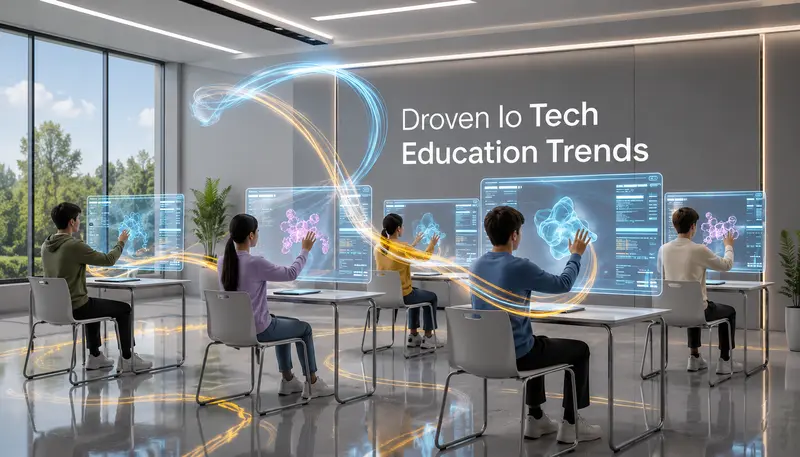

Droven IO Tech Education Trends refer to the major technology-driven changes shaping modern education in 2026, including AI-powered learning, personalized study paths, digital credentials, skill-based training, and smarter classroom experiences. These trends are helping students, teachers, and professionals learn more effectively while preparing for the demands of a rapidly changing workforce.
Education is no longer limited to textbooks, fixed schedules, or traditional classrooms. Technology has changed how people access information, build skills, collaborate with others, and prepare for future careers. The growing interest in droven io tech education trends reflects a larger shift toward flexible, practical, and technology-supported learning.
From artificial intelligence and adaptive learning platforms to micro-credentials and virtual classrooms, modern education is becoming more personalized, accessible, and career-focused than ever before.
Understanding Droven IO Tech Education Trends
Droven IO Tech Education Trends represent the broader movement toward smarter, technology-enabled learning systems. These trends focus on how digital tools, artificial intelligence, cloud platforms, learning analytics, and skill-based education are changing the learning experience.
The goal is not simply to add more technology to classrooms. Instead, the focus is on using technology in ways that improve learning outcomes, increase engagement, and help learners develop skills that are relevant in today’s job market.
Modern education is increasingly centered around:
- Personalized learning experiences
- Flexible study options
- Real-world skill development
- Career readiness
- Continuous learning
- Data-informed decision-making
As technology evolves, education systems are adapting to meet the needs of learners in a digital-first world.
Why Education Is Changing So Rapidly

Several factors are driving the transformation of education in 2026.
First, technology continues to evolve at an unprecedented pace. New tools and platforms appear regularly, changing how information is created, shared, and consumed.
Second, employers are placing greater emphasis on practical skills. Many organizations now prioritize demonstrated abilities alongside traditional academic qualifications.
Third, learners expect more flexibility. Students and working professionals want learning opportunities that fit their schedules, goals, and personal circumstances.
Finally, global connectivity has made educational resources more accessible than ever. People can learn from institutions, instructors, and experts located anywhere in the world.
The Biggest Droven IO Tech Education Trends in 2026
AI-Powered Learning Experiences
Artificial intelligence has become one of the most influential forces in education.
Modern learning platforms use AI to:
- Recommend learning materials
- Adjust lesson difficulty
- Identify learning gaps
- Provide instant feedback
- Support personalized study plans
Instead of following the same path as every other student, learners can receive customized guidance based on their performance, goals, and progress.
AI also helps educators by reducing administrative workloads and providing insights into student learning patterns.
Personalized Learning Paths
One-size-fits-all education is gradually becoming less common.
Personalized learning allows students to progress at their own pace while receiving content tailored to their strengths and challenges.
Benefits include:
- Better engagement
- Improved knowledge retention
- Reduced frustration
- More efficient learning
- Stronger academic performance
Adaptive learning systems can modify content based on student behavior, creating a more individualized educational experience.
Skill-Based Learning Is Gaining Importance
Employers increasingly value practical skills that can be applied immediately in real-world situations.
As a result, educational institutions are focusing more on:
- Problem-solving
- Critical thinking
- Data literacy
- Digital communication
- Technical skills
- Project-based learning
Students are becoming more interested in learning experiences that directly support career growth rather than relying solely on traditional academic pathways.
Micro-Credentials and Digital Certifications
Short-form credentials are becoming a major part of modern education.
Micro-credentials allow learners to demonstrate expertise in specific areas without committing to lengthy degree programs.
Examples include certifications in:
- Cybersecurity
- Data analytics
- Cloud computing
- Artificial intelligence
- Digital marketing
- User experience design
These credentials help learners continuously develop new skills while remaining competitive in evolving industries.
Key Technologies Driving Educational Innovation
| Technology | Impact on Education |
|---|---|
| Artificial Intelligence | Personalized learning and automated support |
| Learning Analytics | Better tracking of student progress |
| Cloud Computing | Anywhere access to learning materials |
| Virtual Reality | Immersive educational experiences |
| Augmented Reality | Interactive learning environments |
| Learning Management Systems | Centralized course delivery |
| Collaboration Platforms | Real-time teamwork and communication |
| Mobile Learning Apps | Flexible on-the-go learning |
How AI Tutors Are Changing Education
AI tutors are becoming increasingly common across educational platforms.
Unlike traditional educational software, AI tutors can:
- Answer questions instantly
- Explain concepts in different ways
- Provide personalized feedback
- Suggest additional learning resources
- Adapt to individual learning styles
These tools do not replace teachers. Instead, they act as learning assistants that provide additional support outside traditional classroom hours.
The combination of human instruction and AI assistance is becoming one of the most effective educational models.
The Role of Teachers in Modern Education
Technology is changing teaching, but it is not eliminating the need for educators.
Teachers continue to play essential roles in:
- Mentoring students
- Building critical thinking skills
- Facilitating discussions
- Providing emotional support
- Encouraging creativity
- Developing social learning experiences
As routine tasks become automated, teachers can spend more time focusing on meaningful student interactions and personalized guidance.
Why Employers Are Focusing More on Skills
The modern workplace changes quickly.
Many employers now prioritize demonstrated competency over academic credentials alone.
They want candidates who can:
- Solve problems
- Work with technology
- Communicate effectively
- Adapt to change
- Collaborate with teams
- Learn continuously
This shift is encouraging educational institutions to align learning outcomes with workforce needs.
As a result, career-focused education continues to gain momentum.
Learning Analytics and Data-Driven Education
Educational institutions now have access to more learning data than ever before.
Learning analytics help educators understand:
- Student engagement levels
- Learning progress
- Completion rates
- Performance trends
- Areas requiring additional support
By analyzing this information, schools can make better decisions and improve educational outcomes.
Students also benefit because they receive more targeted assistance when needed.
Digital Responsibility and AI Ethics
As technology becomes more integrated into education, responsible usage becomes increasingly important.
Key topics include:
Academic Integrity
Students must learn how to use AI tools responsibly while maintaining original thinking and ethical academic practices.
Data Privacy
Educational platforms collect significant amounts of information. Protecting student data is essential for maintaining trust and security.
Responsible AI Usage
Learners should understand both the benefits and limitations of AI systems, including the importance of verifying information and applying critical thinking.
Developing digital responsibility is becoming a core educational objective.
Accessibility and Inclusive Learning
Technology is helping make education more accessible to diverse groups of learners.
Modern tools can support:
- Students with disabilities
- Multilingual learners
- Remote learners
- Adult learners
- Working professionals
Features such as speech recognition, translation tools, screen readers, and adaptive interfaces help create more inclusive learning environments.
This expansion of access is one of the most positive developments in modern education.
What Parents Need to Know
Parents play an important role in supporting modern learning.
They should understand:
- How educational technology is being used
- The benefits of digital learning tools
- The importance of balanced screen time
- Online safety practices
- Responsible AI usage
Technology works best when schools, families, and students collaborate to support educational goals.
Future Careers Linked to These Trends
Many of today’s fastest-growing careers are connected to technology-driven education.
Examples include:
- Artificial Intelligence Specialist
- Data Analyst
- Cybersecurity Professional
- Cloud Engineer
- UX Designer
- Digital Marketing Specialist
- Software Developer
- Learning Technology Consultant
- Instructional Designer
- Business Intelligence Analyst
The skills associated with these careers are increasingly becoming part of educational programs.
Challenges Facing Modern Education
Despite significant progress, challenges remain.
Digital Divide
Not all learners have equal access to technology or reliable internet connections.
Technology Overload
Too many tools can create confusion rather than improve learning.
Training Requirements
Educators need ongoing support to effectively use emerging technologies.
Security Concerns
Educational institutions must protect systems from cybersecurity threats.
Addressing these challenges will be critical to ensuring long-term success.
The Future of Education Beyond 2026

The future of education will likely become even more personalized, flexible, and immersive.
Expected developments include:
- Smarter AI learning assistants
- More advanced virtual classrooms
- Increased use of learning analytics
- Expanded micro-credential programs
- Greater workplace integration
- Enhanced accessibility technologies
Education is moving toward a model where learning becomes a lifelong process rather than something that ends after graduation.
Students will have more control over how, when, and where they learn.
Conclusion
Droven IO Tech Education Trends highlight the ongoing transformation of education in 2026. Technology is reshaping learning through artificial intelligence, personalized education, digital credentials, learning analytics, and career-focused skill development.
The most successful education systems will not simply adopt more technology. They will use technology strategically to improve learning outcomes, support educators, increase accessibility, and prepare learners for the future workforce.
As education continues to evolve, flexibility, adaptability, and continuous learning will become more important than ever. Those who embrace these changes will be better positioned to succeed in an increasingly digital world.
Frequently Asked Questions
What are Droven IO Tech Education Trends?
Droven IO Tech Education Trends refer to major technology-driven developments that are transforming education through AI, personalized learning, digital credentials, and modern learning platforms.
Why are Droven IO Tech Education Trends important?
They help educational institutions and learners adapt to changing workforce requirements while improving learning experiences and outcomes.
How does artificial intelligence support education?
AI supports education through personalized learning recommendations, automated feedback, adaptive lessons, and learning analytics.
Are AI tutors replacing teachers?
No. AI tutors are designed to support learning and provide additional assistance, while teachers remain essential for guidance, mentorship, and critical thinking development.
What are micro-credentials?
Micro-credentials are short, focused certifications that demonstrate expertise in specific skills or subject areas.
Why is skill-based learning becoming more popular?
Employers increasingly value practical skills that can be applied immediately in professional environments.
How do learning analytics improve education?
Learning analytics help educators monitor progress, identify challenges, and provide targeted support to students.
What role does cloud computing play in education?
Cloud computing allows learners and educators to access materials, collaborate, and manage educational resources from anywhere.
How does technology improve accessibility?
Technology supports accessibility through adaptive tools, screen readers, speech recognition systems, translation services, and flexible learning options.
What careers are influenced by these education trends?
Careers in AI, cybersecurity, cloud computing, software development, digital marketing, data analytics, and instructional design are strongly connected to these trends.
What challenges come with technology-driven education?
Common challenges include unequal access to technology, cybersecurity concerns, educator training requirements, and technology overload.
What is the future of education after 2026?
Education is expected to become more personalized, AI-assisted, skill-focused, and accessible while supporting lifelong learning opportunities.
Read More: Exploring quantum computing and its impact on future technologies
